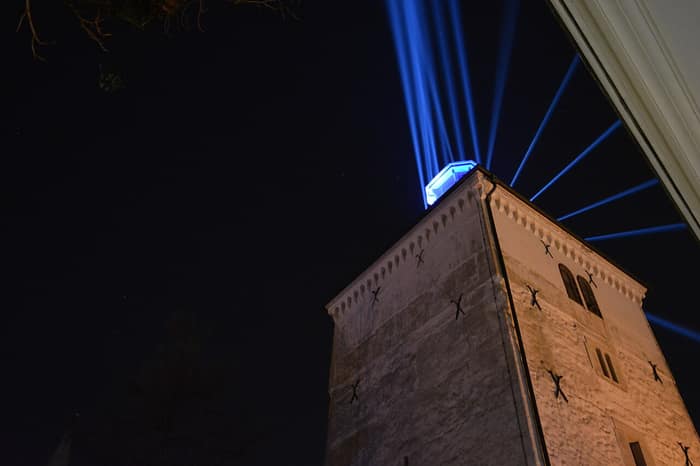
Lotrščak Tower: the gate tower with Zagreb's noon cannon
Lotrščak Tower (Kula Lotrščak) is a fortified tower in Gornji grad, the old Upper Town of Zagreb. Built in the 13th century to guard the southern gate of the Gradec town wall, it is now best known for the Grič cannon fired from its fourth floor at noon, and for the viewing platform at the top. It is one of the city's symbols and one of the best preserved parts of its medieval defences.
Every day at noon a cannon shot rings out over Zagreb from a medieval tower. The tower takes its name from a bell that once warned thieves, and townspeople, that the city gates were about to close.
The history of Lotrščak Tower
In 1242 the Croatian-Hungarian King Béla IV issued the Golden Bull, granting Gradec the status of a free royal city in recognition of the hospitality and refuge it had given him during his flight from the Tatars. The charter also required the citizens to fortify the settlement with walls and towers. Work on the fortifications lasted about twenty years and was completed in 1266. Lotrščak Tower was built as part of this system. Its main task was to defend the southern entrance to the city, the small Dverce gate, which was demolished in 1812 during the redevelopment of the southern promenade, now known as the Strossmayer Promenade.
In its first form the tower was a Romanesque fortification with a square plan. Its medieval appearance is not fully documented, but old drawings suggest two floors with two windows each and a four-sided roof. Originally it was called the tower of Dverce. From 1646 it took its present name, when a bell was hung in it: the Latin campana latrunculorum, the bell of the thieves, rung in the evening before the city gates were closed. The popular Zagreb form of the word, lotrijaši, led to Lotrščak.
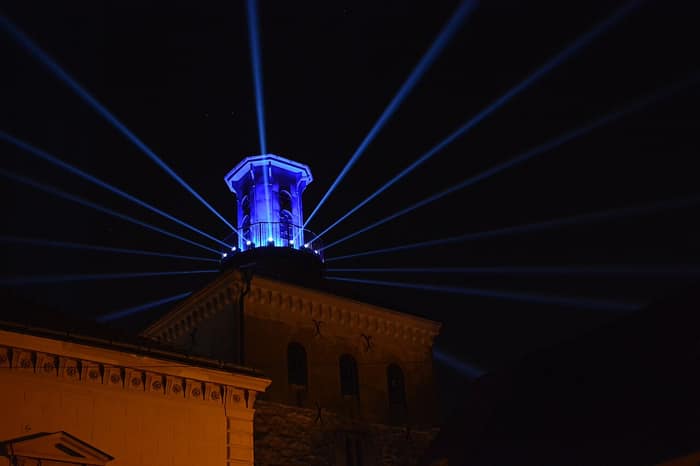
As the town's defensive needs faded, the tower was adapted to other uses. Towards the end of the 16th century its ownership and functions changed, and the city sometimes leased it to private citizens on condition that they maintained it; in case of attack it had to be handed back for defence. From the 17th century it served as a commercial storehouse. The most significant alterations came in 1857, during a Romantic-era restoration of medieval buildings, when two floors and a polygonal wooden fire-observation turret were added. The architect Kuno Waidmann carried out the reconstruction that gave the tower its present look. During the 19th century a café operated on the ground floor, and the building was also used for housing.
Towards the end of the 19th century the city decided to buy a cannon to fire every day at noon, giving the bell ringers of the city churches an exact time signal. It was fired for the first time on New Year's Day 1877. Firing was interrupted during the First World War and resumed in 1927. Today the tower is part of the public institution Klovićevi Dvori Gallery. An art and gift shop occupies the ground floor, and the upper levels have a viewing platform over Zagreb.
Curiosities about Lotrščak Tower
- The name comes from the Latin campana latrunculorum, the bell of the thieves, hung in the tower in 1646 to signal the closing of the city gates.
- The Grič cannon, fired from a southern window on the tower's fourth floor, marks midday every day; it was first fired on 1 January 1877.
- The noon shot was originally meant to give the exact time to the bell ringers of the city's churches.
- The cannon fell silent during the First World War and was fired again from 1927.
- The tower is about 30 metres high in all: roughly 19 metres of tower, 5 of roof and 6 of dome.
- The Dverce gate that the tower guarded was demolished in 1812, but the tower itself survived.
Tours near Lotrščak Tower
Experiences in the area that you can book online with Viator:


Visiting Lotrščak Tower
- The tower stands in Zagreb's Upper Town, beside the Strossmayer Promenade, where the Dverce gate once stood.
- From the viewing platform at the top there are views over the city. Check the current opening hours before you go.
- The ground floor houses an art and gift shop, and the tower is also used for exhibitions and cultural activities, including photographic exhibitions about Zagreb.
- Plan your walk so you are nearby at noon, when the Grič cannon is fired from the fourth floor.
- Nearby sights of this guide are the Stone Gate, which is just a short walk away, and the Well of Life.
Opening hours, access and conditions can change. Check before you go.
Map: where Lotrščak Tower is
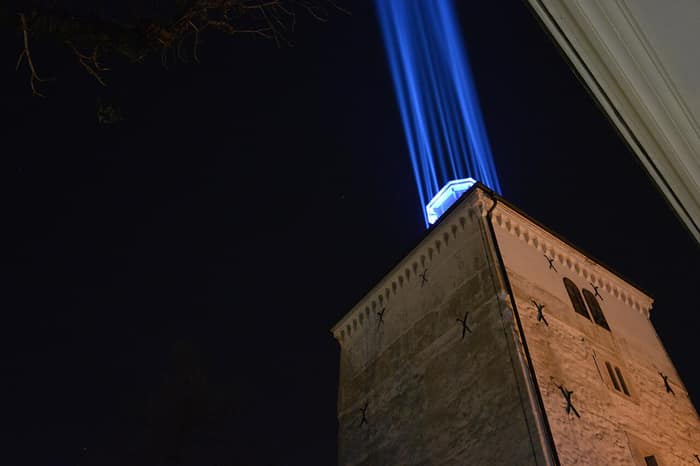
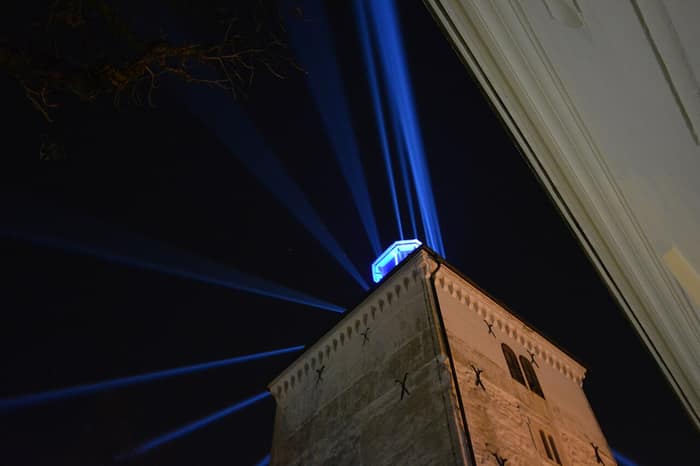
Photos of Lotrščak Tower
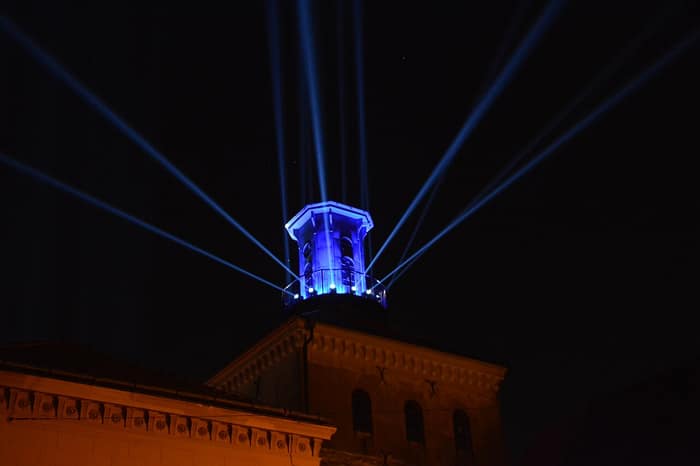
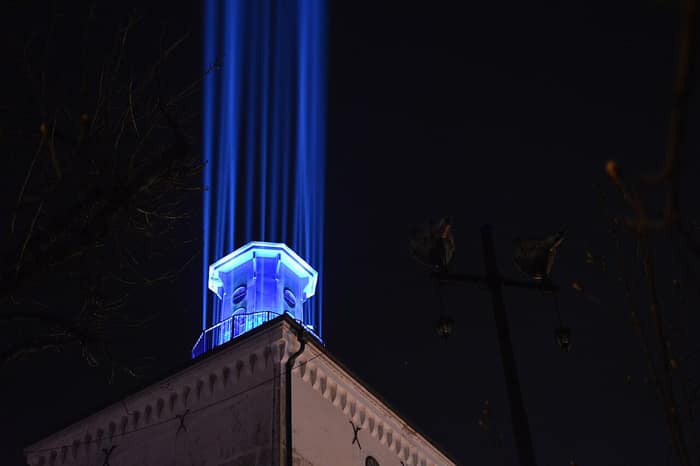
Questions
Where is Lotrščak Tower?
Lotrščak Tower is in Gornji grad, the Upper Town of Zagreb, beside the Strossmayer Promenade, where the small Dverce gate of the Gradec wall once stood.
Why is it called Lotrščak Tower?
The name derives from the Latin campana latrunculorum, the bell of the thieves, a bell hung in the tower in 1646 to signal that the city gates were about to close.
When is the cannon fired at Lotrščak Tower?
The Grič cannon is fired every day at noon from a southern window on the fourth floor. It was first fired on 1 January 1877.
How old is Lotrščak Tower?
The tower dates from the 13th century and was built as part of the Gradec fortifications, which were completed in 1266. It was heavily altered in the 19th century.
Can you go up Lotrščak Tower?
Yes, the upper levels have a viewing platform overlooking Zagreb. Check the current opening hours before you go.
What else is there to see near Lotrščak Tower?
The Stone Gate, another surviving part of Gradec's medieval defences, is a short walk away.
Also nearby
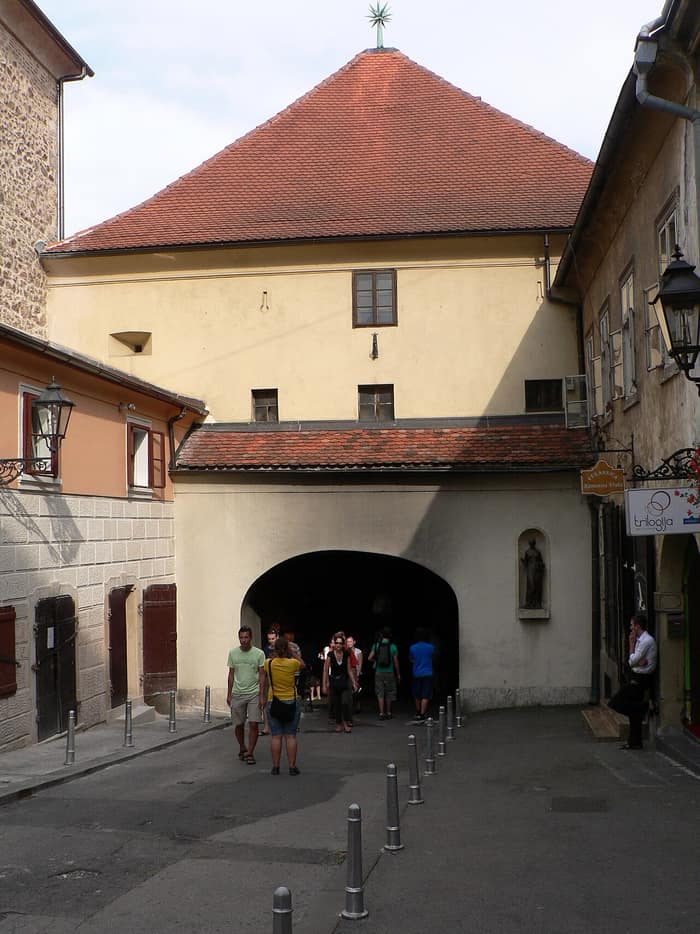
Stone Gate
Zagreb · last medieval gate and a candlelit shrine to Mary
200 m away
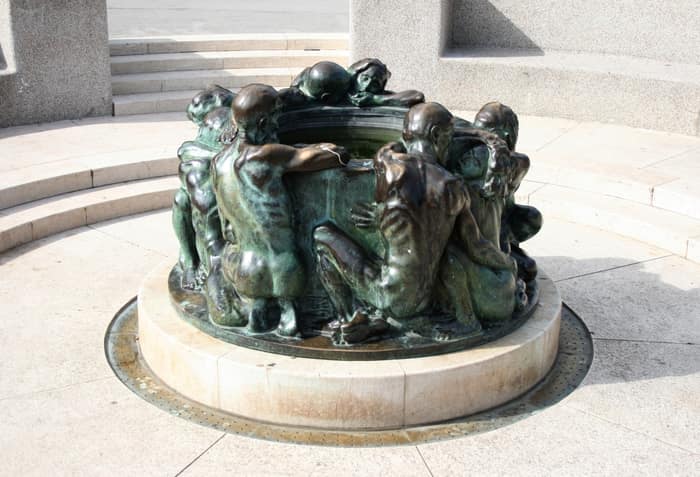
Well of Life
Zagreb · Meštrović's circle of bronze figures around a well
550 m away
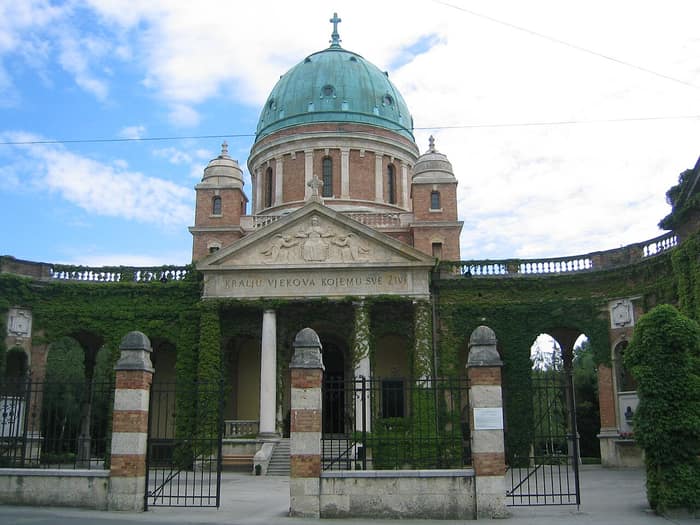
Mirogoj Cemetery
Zagreb · arcades, domes and the 'Croatian Pantheon'
2.5 km away
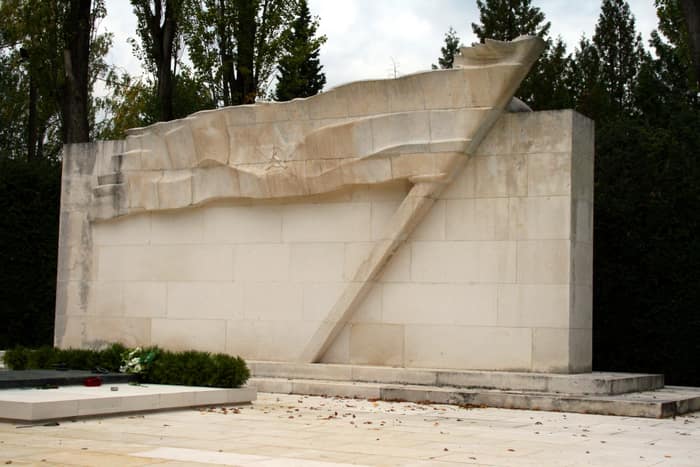
Tomb of the People's Heroes, Zagreb
Zagreb · Yugoslav-era memorial tomb at Mirogoj cemetery
2.5 km away